I heard about recipes for three ingredient peanut butter cookies. I wanted something a bit more actual cookie texture (think less greasy) and with less sugar than the versions I have come across. So I decided to play with the proportions plus I wanted to add some gf flour. I cut the sugar by one fourth and dumped in a small amount of flour. To make sure my results weren’t like a brick I added some baking powder and to keep them from being incredibly crumbly messes I tossed in a touch of xanthan gum. The resulting dough was still a tad crumbly but when you scrunch up about a tablespoon with your fingers it forms a ball that can be flattened with a fork dipped in granulated sugar in the traditional cross hatch of all great peanut butter cookies.
The results: simple but tasty = peanut butter heaven. I must advise that I used chunky peanut butter. I don’t much care for creamy peanut butter so I try not to have to buy it for recipes. So I chunked it and my somewhat picky eater who doesn’t like chunky peanut butter was in love with these beauties. I am guessing it would work with creamy. Let me know how they turn out if you make them with a creamy peanut butter.
To review, significantly lower in sugar than most three ingredient recipes, great flavor and texture and simple to make. Bonus: they still remind me of the peanut butter cookies of my childhood…which were full of all purpose flour! I used my typical flour blend; King Arthur gf blend but I am sure Better Batter or Cup for Cup will work. If your blend has gum in it no additional gum is needed so leave that quarter teaspoon out.
Note: if you love the salty cookie concept, sprinkle with coarse sea salt before baking. Either sweet or salty they are somewhat addictive, especially fantastic with a glass of cold milk.
Chunky Peanut Butter cookies
1 cup chunky peanut butter ¾ cup sugar 1 large egg (room temp) ½ cup gf flour blend (I used King Arthur basic gf blend) ½ tsp. baking powder ¼ tsp. xanthan gum
¼ cup sugar for fork action Coarse sea salt (optional)
Directions: Mix first six ingredients well in stand mixer. Form into balls by squeezing in hand. Place on ungreased cookie sheet, press with fork dipped into sugar. Sprinkle with coarse sea salt if desired.
Bake at 375 for 9 to 11 minutes. Watch carefully – they burn easily. Let stand one minute before lifting off with pancake turner to a cooling rack. Eat and enjoy these gems of cookies…you will be taken back to your childhood.
December is upon us. Pies are being baked for dessert, pumpkin roll is on the menu and cookie season is pretty much here. I have already had emergency calls about gf flour choices and substitutions in creating something gf when the baker is not gf and is more than a little confused. So, I am reposting this flour treatise from last year, in the hopes that folks will read it and use this information to have the best possible results. GF baking is more technical than wheat flour-based recipes. Substituting is trickier especially flour subbing. So, before you make those gf cookies for a family member, read up on the differences, so you use the right flour.
So, I am writing this post for a friend who wants to cook gf cookies for someone in her family for the holidays. I want to go over the flour issue particularly for someone new to cooking gf meals. It is slightly tricky, so I am going to try to make it clear for everyone: here goes.
you could use this rice flour for gravy making
There are individual gf flours like rice flour, buckwheat flour, oat flour, tapioca flour, sweet rice flour, potato starch, cornstarch, sorghum flour, brown rice flour, etc.! A bewildering array of choices as almost any grain can be ground into a flour. Flour can then be processed to create a starch, which tends to be nearly flavorless but often has a big purpose in gf baking. I rarely use just one flour in a baking recipe. Why? Because a single flour is often missing an important characteristic of what we want in a baking result. A mixture has different kinds of flours to replicate all purpose flour (wheat based) or whole grain flour (also wheat based). Without the gluten there are a number of ways to make it a useful blend for cooking or baking. That said, I use just single flour blends in sauces. Just for sauces people!
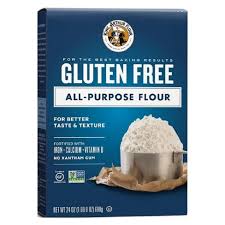
I usually use blends for baking, 2-6 flours that work together to mimic wheat-based flour in different applications like bread, cake, cobbler, cookies, pastry or pasta dough. I have a number of them but my favorite is one you can buy in most stores. King Arthur’s Basic GF Blend; made of a proportional blend of brown rice flour, potato starch and tapioca starch. I use it for over 90% of my baking and cooking needs. There are a number of blends available from companies like Bob’s Red Mill or Jeanes. One of my favorites is Better Batter; never see it in the store but it can be found on line. There are many, many blends provided in gf cookbooks. It can cause a traffic jam of jars/cans/zip lock bags of blends labeled and stored in your freezer or fridge. Some of these blends have a gum like xanthan gum included. The gum helps your finished bread/cookie/cake hold together – in wheat based recipes it is the gluten that is the “glue” that holds things together. My blend doesn’t have it so I add it based upon my recipe. Xanthan or guar gum are commonly used. Doesn’t take much xanthan gum; ½-1 tsp is often enough. You should always check on this gum issue; if none in the flour mix you will need to add some; often about 1/2 teaspoon per cup of flour. This amount of gum does vary due to what you are making. Look at a similar gf recipe and add as much gum as that recipe does.
If your recipe is a recipe not formatted for gluten free baking, you must use a special blend meant for that circumstance. They are called measure for measure or one-for-one blends. They were not around a decade ago; fairly new. They are carefully calibrated to sub in for all purpose flour. They may not work as a substitute for whole wheat or rye flour. Let me know if you successfully do that!
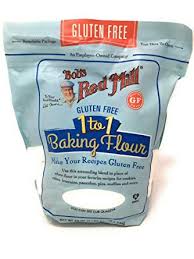
I have used this measure for measure blend and had good results. It is calibrated to be substitutable in any gluten flour-based recipe except I would not recommend it for yeasted breads. Bob’s Red Mill calls it 1 to 1 Baking Flour; same idea as measure for measure. Again, use this in your regular recipe instead of the all-purpose flour in the recipe. Not suggested for yeast breads.
As I wrote above, measure for measure flowers are fairly new and very useful. They are for when you want to make a normally gluten-based recipe but use a gf flour. FYI: most gf recipes have been altered from their original recipe or are created just for gf flour. If you want to take those cookies, you can’t enjoy anymore and sub in gf flour these new measure for measure blends are perfect to do that. You don’t need to alter your recipe or add gum. The flour blend is made to mimic regular all-purpose flour. It is not interchangeable with things like the Basic GF Blend from King Arthur that I mention above. Don’t use measure for measure in a gf calibrated recipe, use it to make stuff from your old wheat flour-based recipes. King Arthur or Bob’s Red Mill or a few other companies have a measure for measure blend so get that if you want to take your gluten-based recipe and change it to gf. I must caution you that these flours don’t work as well if you are replacing flour in a yeast bread recipe. Works for quick breads, cookies, muffins, and many cakes but I wouldn’t make my old fav Italian bread recipe with these measure for measure as the result is unlikely to be similar to the recipe as made with wheat-based flour. Besides, I have an awesome gf Italian bread recipe my family clamors for!
One more thing, many companies now have gf baking mixes that can be used to make muffins, cookies, cakes, pancakes, etc. They are different from the blends described above. Do not substitute those blends for a basic blend like the one I use. These blends already have gum, baking powder, salt, etc. added to the flour. They are very convenient and there are lots of recipes formulated for using them.
I used an image for King Arthur baking mix as this is the only premade mix I have tried. It works great!
To repeat; there are single flours, there are blends with or without gum added, there are measure for measure blends for use in gluten based recipes you want to recreate as a gf dish and there are baking mixes that can be used as a starting place for a quickly constructed baked good like a cake, cookie or muffin. I know, it seems complicated but read your recipe carefully so you get the right kind of flour to make it successfully. The wrong flour will give you a poor result as gf baking is relatively unforgiving of big errors like that.
Oh, and there are read-made cake or brownie mixes just like you can buy with wheat based flour; you add eggs, milk/water and oil to them to complete the mixture.
None of these blends/mixes are interchangeable between other types of blends. Use the blend the gluten free recipe asks for. If it is an old all purpose flour based recipe use the measure for measure. Except; do not use that measure for measure for a yeasted bread; unlikely to work especially when you use over 2 cups of it in a recipe; the more it is depending on flour the less likely it will be successful.
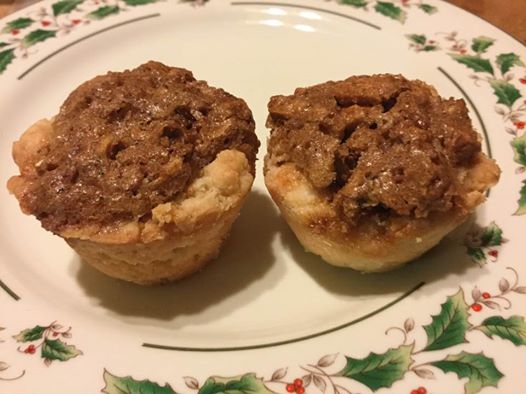
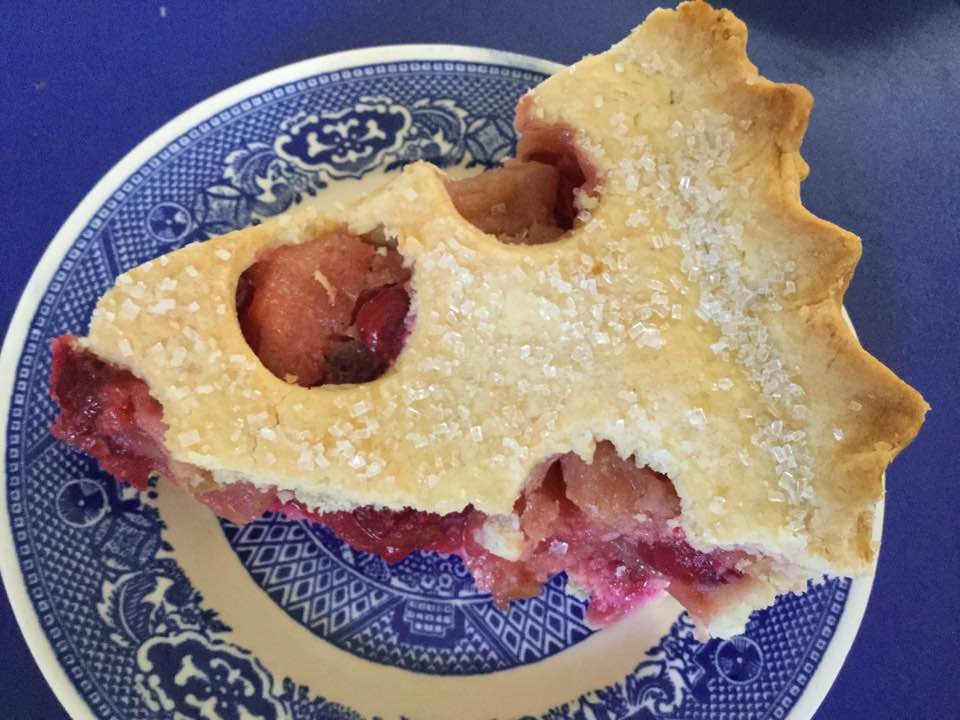
pie made with King Arthur Basic GF flour blend
My recipes generally tell you which flour blend I used. You cannot sub in measure for measure for a basic blend. Nor can you use a baking mix for anything but a recipe meant specifically for a baking mix. Get the right flour and you will have a great start towards a delicious result. I hope I have educated you on this issue so you can be successful if you need to bake gf this holiday season. Have fun baking!
PS: I am baking Christmas cookies Sunday afternoon at a friend’s house; we will be using measure for measure mix for some recipes and King Arthur Basic GF Blend for some other recipes; it really depends on the recipe. I anticipate some delicious tender cookies that everyone will love whether they are eating gf always or just at this family’s gathering.





 My World Without Wheat