Discard Sourdough Bread Made with a Preferment

This is my new favorite bread recipe. You need to make a gf starter; lots of directions online. its not that difficult and you can buy a freeze dried one on-line. I prefer one made with brown rice flour and it needs to be at least 2 or 3 weeks old before using it. The weeks of forming it include lots of discarding a portion of it in efforts to get rid of harmful or poor tasting bacteria. I suggest you read up on the process, so you have a good idea of the process before you make one.

This is a pretty easy bread recipe for a beginner. You do need these assorted flours but trust me, if you have to eat gf you are probably sick of expensive and flavorless store breads so buying these flours is well worth it. I keep the sorghum, brown rice, millet and psyllium husk powder in the freezer, so they each stay fresh. You should put them in a freezer bag if their container is flimsy.

You could probably use a portable mixer, but a stand mixer is best. I use a scale to weigh most of my ingredients, necessary for exacting measurements. They aren’t that expensive and if you bake much, one is a necessity. My recipe is a take-off of one by Gluten Free Gourmand. I added the preferment step to my version to increase flavor and improve texture.

The preferment is a fancy term for a mixture of the sourdough starter, flour and warm water that stands around for 4 to 24 hours, some people let it stand even longer. Its purpose is to add sour flavor to the bread; without it your bread will be a bit bland, and it also can help the texture especially if you use an active starter (fed with flour and water that day so it is bubbly and active). I find the use of the preferment step makes this bread deliciously sour and with a lighter texture. It isn’t hard to do; I actually use a 32 oz yogurt container with a lid and just leave it sit for that day to get sour; simply dump the entire contents, including any separated liquid, into the bread dough mixture. Super easy and it definitely improves flavor and texture.

There is no tricky kneading or shaping of this bread. I roll it into a tube shape and bake in a metal loaf pan so I have the traditional bread shape for use in sandwiches. This bread made great grilled cheese or panini sandwiches. I slice up the loaf the day after baking it and freeze it in a freezer Ziplock; defrost in microwave for 50-60 seconds and you are ready to toast it or make a grilled sandwich! You can make it in a round or oval boule if that floats your boat; you might want to use a banneton to shape it as it rises and a cast-iron Dutch oven to bake it in. I generally like the boule recipe on Bakerita.com for that sort of sourdough but this recipe below could be shaped, risen in a mold called a banneton and baked in a boule. My Dutch oven is oval, so I tend to make oval loafs in it; they slice in nice slices which are mostly the same size.
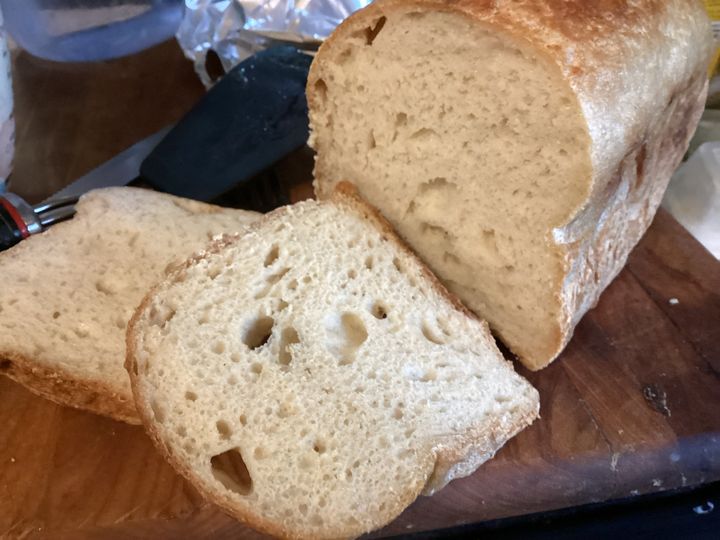
Discard Sourdough Bread Made with a Preferment

Preferment:

200 gms (grams) active starter

80 gms sorghum

100 gms warm water (95-115 degrees)

Mix in a plastic lidded container and let stand for 24 or more hours

Dough directions – Ingredients:

Mix in stand mixer bowl

65 gms potato starch (you could do 115 gms potato starch and leave out the cornstarch)

50 gms cornstarch

40 gms millet flour

40 gms tapioca flour

9 gms sea salt

20 gms psyllium husk powder

Mix well and add 1 tsp active dry yeast

Add 280 gms warm water and the preferment. Mix with beater of stand mixer for 1-2 minutes until well blended. I have a beater with a built-in scraper; use it or a separate scraper to push all dough together into a rough ball. Cover with a damp lint free kitchen towel and put in a warm place for 60-90 minutes. I leave the beater in the bowl for this first rise.

Add these three things: 75 gms tapioca flour, 1 tbsp. sugar and 1 tbsp apple cider vinegar, Blend well with the stand beater. Turn out onto lightly floured bread board, form into a log; I like to roll it back and forth to smooth the bumpy surface. Place in a metal baking loaf pan sprayed with gf cooking spray. Cover with the damp cloth and put back in the warm place for 60-90 minutes. It should have risen some but doubtful it will double. I like it to be puffy but not too puffy or it might become over risen, not good!

Preheat oven to 450 degrees when the bread is close to ready for baking. While it heats put a low pan of hot water in the oven so it comes to a boil while in your oven. I like my baking shelf set in the middle slot. Bake the bread 30 minutes covered loosely with aluminum foil and then 20 minutes more without the foil. Remove from pan within 5 minutes and cool for a minimum of 4 hours; I like more than that. I often bake this in the later afternoon to evening and then cut it in the morning. Enjoy!

Blueberry Apple Cobbler September Delight!

I make a lot of blueberry cobbler when we are camping. Since the blueberry season is pretty much over, I decided to add some fresh apple cubes and they made it taste so bright and lively, cobbler delightful!

This recipe is modified from one in Bette Hagman’s book, More from the Gluten-Free Gourmet and is based on a flour mix that will give you 4 cups of the dry ingredients.  One cup is the base for an 8×8 pan of cobbler topping.  I bet two cups dry mix will make a big 9×13 cobbler. Store the dry mix in an airtight container in the freezer to keep it fresh.

I have tried a number of cobbler recipes but nothing has been better than this one, so I generally stick to what works for me.  But I have modified it a bit lately; cut out one egg, less milk, coconut palm sugar in the filling and I grate cold butter on large hole side for great dumpling texture.

I always get the fruit cooking before putting the topping together so the fruit is hot and ready for the topping and can go right into the oven. I always let it stand 10-20 minutes as it is way too hot to eat fresh off the campfire or the oven.

Dry Cobbler Mix

2 ¼ cups white rice flour

½ cup potato starch

½ cup tapioca flour

1 tsp. baking soda

4 tsp. baking powder

1 tsp salt

1 tsp. xanthan gum

1/3 cup sugar

Cobbler Topping

1 cup dry baking mix

1 egg

2 tbsp grated cold butter

1/4 cup milk/buttermilk

½ tsp. vanilla

Mix the wet ingredients and then add to the dry mix in a big bowl. Grate in butter BEFORE adding the wet ingredients; i stir it gently after grating it in.

Fruit Filling

2 cups blueberries

2 cups cubed peeled and cored apples; 2 medium apples was enough.

1/3 ½cup coconut palm sugar

2-3 tbsp. GF flour like rice flour, tapioca flour (use 3 if juicy)

½ tsp cinnamon

Directions:

Put the fruit in a thick bottomed saucepan. Stir together the sugar, cinnamon and flour and mix into the fruit.  Cook on the stove top for 3-5 minutes until it is thickened and hot.  Pour into a buttered 8 inch square or round oven pan, top with big blops of the cobbler topping. Bake immediately: at 350 degrees for 25 minutes.  The top should be light brown and spring back when you poke it with your finger.  If it looks damp or squishy bake it 5 more minutes. This happens if I use more than 4 cups of fruit; slows it down, sometimes even ten extra minutes if you put 5 or so cups of fruit in it.

Let cool 10-20 minutes before serving as it will burn your mouth right out of the oven!  Some people love it with a scoop of vanilla ice cream.  Cobbler is perfect just on its own.

Note: if you use oil and almond milk then this cobbler will be dairy free.  Spray the cobbler pan with cooking oil instead of rubbing with butter. I think you can use any sort of milk you can find or even fruit juice.

No new pictures; we were camping and I didn’t take any pictures.

Strawberry Rhubarb Pie… Classic Pie of Late Spring: Easy to Make GF

It is the peak of local strawberry season and rhubarb is still plentiful right now, so this was a perfect pairing for adaptation to a gluten free pie recipe.  This is an easy pie to construct, and you can store any leftover crumb mixture in a sealed container in the fridge; it keeps a few weeks.  The GF crust will work for any pie and the GF crumb topping is perfect for any crumb pie.  If you prefer a solid crust just double the crust part and top your pie with it.  Be sure to cut some slits for steam escape!  strawberry rhubarb pie

Please make every effort to use local strawberries; you can get them at most farm stands from now to about June 10th.  This pie really showcases the strawberries more than the rhubarb which is a silent partner so that is why I suggest you get the best; locally grown sweet ripe strawberries to make your perfect pie.

Bake and enjoy June in a delicious pie in just a few minutes of work.  Don’t eat it hot; it should be cooled to room temperature or even chilled. I ate it both ways and liked it either way.  I am guessing you could top this with vanilla ice cream.  Maybe next time.

Angie’s GF Strawberry Rhubarb Crumb Pie

Crust:

1 c plus 2 tbsp brown rice flour mix (at bottom of recipe)

2 tbsp sweet rice flour

1 Tbsp. granulated sugar

½ tsp xanthan gum

¼ tsp salt

6 Tbsp. cold butter cut into 6 chunks

1 lg egg

2 tsp fresh orange or lemon juice

Spray a 9-inch metal pie pan with cooking spray, dust with white rice flour.

Mix dry ingredients in bowl of stand electric mixer.  Add butter and mix until crumbly and resembling coarse meal.  Add egg and juice.  Mix until it comes together into big chunks.  Shape into a ball with your hands. Put it on a crust sized piece of wax paper (14 x 14 inches more or less), flatten the crust ball some; put on top of it another piece of wax paper and chill it all in your fridge 15-20 minutes while you chop the rhubarb into ½ inch chunks and hull/slice the strawberries.

Filling:  strawberry rhubarb raw

2 cups fresh strawberries, rinsed, hulled and cut in thick slices

2-3 cups cut up fresh rhubarb – place in medium bowl

Mix with

½ to 2/3 cup sugar ( I used ½ cup but I guess some like things really sweet so I gave a range of sugar amounts.)

1/3 c gluten free flour mix (see below recipe or use any you like: I actually used a mock Better Batter flour for this pie filling.)

Roll out pie crust in a pie bag or between the two sheets of wax paper, try to get the thickness even, no thick middle! Peel off one side of paper and place in pie pan, centered.  Remove other slice of wax paper.  Crimp edges all around.  Fill with dry strawberry – rhubarb mixture

Crumb topping

Put all four ingredients in the same mixing bowl you made the bottom crust in and mix well with mixer paddle until crumbs form.

¾ c brown rice flour mix

½ c sugar

½ tsp xanthan gum

1/3 c cold butter cut into six chunks

Sprinkle the top of the pie with the crumb mix; use as much as you like.  I like about ½ to 2/3 of the mixture.  Up to your personal taste… It sinks partially into the fruit mixture and adds lots of sweetness and eye appeal.

Bake in a preheated 425-degree oven for 40-50 minutes until bubbly and the crust is light brown.  Cool at least 2 to 4 hours before serving at room temperature.

Brown Rice Flour Mix
2 c brown rice flour

2/3 c potato starch

1/3 c tapioca flour

Demystifying GF Flours for Baking Fun

Full winter is upon us. Pies are being baked for desserts, cake is often on the menu and cookie season is pretty much always here. I have had emergency texts about gf flour choices and substitutions in creating something gf when the baker is not gf and is more than a little confused. So, I am reposting this flour treatise from last year, in the hopes that folks will read it and use this information to have the best possible results. GF baking is much more technical than wheat flour-based recipes. Substituting is trickier especially flour subbing, partially because of all the new 1 to 1 blends, baking mixes and other innovations. So, before you make those gf cookies for a gf friend, read up on the differences, so you use the right flour. The wrong one will give you a poor result; so important to know what you are doing flour wise.

So, I am writing this post for a friend who bakes gf cookies for someone in her family. I want to go over the flour issue again, particularly for someone new to cooking gf meals. It is slightly tricky, so I am going to try to make it clear for everyone: there are a lot of issues and different scenarios so be sure to read the whole article. So, here are my best thoughts and advice on using gf flours for gravy, and especially for baking.

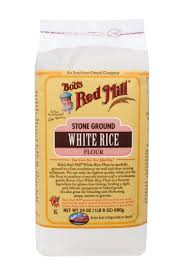
You could use this rice flour for gravy making.

There are individual gf flours like rice flour, buckwheat flour, oat flour, tapioca flour, sweet rice flour, potato starch, cornstarch, sorghum flour, brown rice flour, etc.! A bewildering array of choices as almost any grain can be ground into a flour. Flour can then be processed to create a starch, which tends to be nearly flavorless but often has a big purpose in gf baking. I rarely use just one flour in a baking recipe. Why? Because a single flour is often missing an important characteristic of what we want in a baking result. A mixture has different kinds of flours to replicate all purpose flour (wheat based) or whole grain flour (also wheat based). Without the gluten there are a number of ways to make it a useful blend for cooking or baking. That said, I use single flour blends in sauces. Just for sauces people!

I usually use blends for baking, 2-6 flours that are blended and work together to mimic wheat-based flour in different applications like bread, cake, cobbler, cookies, pastry or pasta dough. I have a number of them, but my favorite is one you can buy in most stores.  King Arthur’s Basic GF Blend; made of a proportional blend of brown rice flour, potato starch and tapioca starch.  I use it for over 90% of my baking and cooking needs. There are a number of blends available from companies like Bob’s Red Mill or Jeanes. One of my favorites is Better Batter; never see it in the store but it can be found online. There are many, many blends provided in gf cookbooks.  It can cause a traffic jam of jars/cans/zip lock bags of blends labeled and stored in your freezer or fridge.  Some of these blends have a gum like xanthan gum included. The gum helps your finished bread/cookie/cake hold together – in wheat based recipes it is the gluten that is the “glue” that holds things together. My blend doesn’t have it so I add it based upon my recipe. Xanthan or guar gum are commonly used. Doesn’t take much xanthan gum; ½-1 tsp is often enough in any recipe. FYI: Better Batter has the gum in it. You should always check on this gum issue; if none in the flour mix you will need to add some; often about 1/2 teaspoon per cup of flour. This amount of gum does vary due to what you are making. Look at a similar gf recipe and add as much gum as that recipe does. There also is psyllium gum but it is mainly used in breads and rolls. Not so much for cookies and cakes.

Next; If your recipe is a recipe not formatted for gluten free baking, you must use a special blend meant for that circumstance. They are called measure for measure, or one-for-one blends. They were not around a decade ago; fairly new. They are carefully calibrated to sub in for all-purpose flour. They may not work as a substitute for whole wheat or rye flour, and yeast baking is not where this flour is meant to be used, it is great for your all purpose flour cookie or cake recipes.

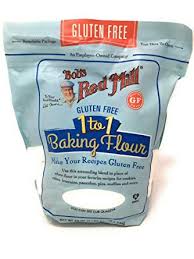
I have used this measure for measure blend and had good results. It is calibrated to be substitutable in any gluten flour-based recipe except I would not recommend it for yeasted breads. Similar restrictions on using Bob’s 1 for 1 GF Blend; not for breads except quick breads. Do not use these blends as a substitute for GF flour blends like King Arthurs Basic GF Blend. They are not interchangeable. They are basically just for when you want to make a cookie or cake that is not meant to be gluten free; these flour 1 for 1 blends sub in and magically make the cookie recipe work using this special blend created exactly for this purpose.
Amazon.com : Bob's Red Mill Gluten Free 1-to-1 Baking Flour, 44-ounce :  Grocery & Gourmet Food
Bob’s Red Mill calls it 1 to 1 Baking Flour; same idea as measure for measure. Again, use this in your regular recipe instead of the all-purpose flour in the recipe. This is an excellent flour blend but is Not suggested for yeast breads.

As I wrote above, measure for measure flour is fairly new and very useful. They are for when you want to make a normally gluten-based recipe but use a gf flour. FYI: most gf recipes have been altered from their original recipe or were created just for gf flour. If you want to make those cookies, you can’t enjoy anymore and sub in gf flour these new measure for measure blends is perfect to do that. You generally don’t need to alter your recipe or add gum. The flour blend is made to mimic regular all-purpose flour. It is not interchangeable with things like the Basic GF Blend from King Arthur that I mention above. Don’t use measure for measure in a gf calibrated recipe, use it to make stuff from your old wheat flour-based recipes. [Yes, I am repeating myself but I am finding that people are doing exactly what I caution not to do so repeating myself!] King Arthur or Bob’s Red Mill or a few other companies have a measure for measure blend so get that if you want to take your gluten-based recipe and change it to gf. I must caution you that these flours don’t work well if you are replacing flour in a yeast bread recipe. Works for quick breads, cookies, muffins, and many cakes but I wouldn’t make my old fav Italian bread recipe with these measure for measure as the result is unlikely to be similar to the recipe as made with wheat-based flour. Besides, I have an awesome gf Italian bread recipe my family clamors for!

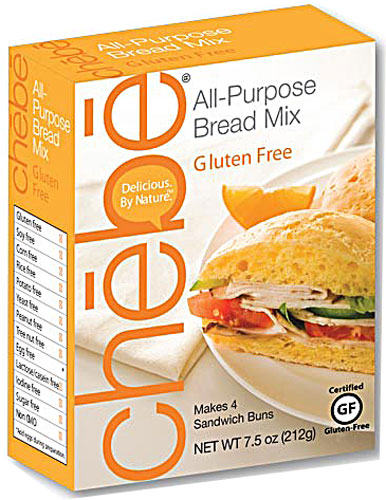
One more thing, many companies now have gf baking mixes that can be used to make muffins, cookies, cakes, pancakes, etc. They are different from the blends described above. Do not substitute those blends for a basic blend like the one I use. These blends already have gum, baking powder, salt, etc. added to the flour. They are very convenient and there are lots of recipes formulated for using them. There are bread flour mixes that can be used to create shaped pastries; I just bought 1 boxes of Chebe All Purpose Bread Mix. Can’t wait to test it in a pastry recipe I found recently. These gf baking mixes cannot be used in place of the gf flour specified in a recipe or to use like a 1 for 1 Substitution gf flour. they are very specific to recipes that require them or the recipes on the box or the manufacturer’s website.

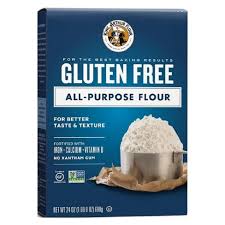
King Arthur Flour Baking Mix, All Purpose, Gluten Free | Flour & Meals |  Edwards Food Giant
I used an image for King Arthur baking mix as this is the only premade mix I have tried. It works great!

To repeat; there are single flours, there are blends with or without gum added, there are measure for measure blends for use in the gluten-based recipes you want to recreate as gluten free dishes and there are baking mixes that can be used as a starting place for a quickly constructed baked good like a cake, cookie or muffin. I know, it seems complicated but read your recipe carefully, so you get the right kind of flour to make it successfully. The wrong flour will give you a poor result as gf baking is relatively unforgiving of big errors like that.

Oh, and there are read-made cake or brownie mixes just like you can buy with wheat-based flour; you add eggs, milk/water and oil to them to complete the mixture. The grocery store will likely have a number of choices for gf mixes to make brownies, cakes and other baked goods. Amazon has lots too! It’s where I got the Chebe flour mix.

Here is that Chebe Bread mix I mentioned above.

None of these blends/mixes are interchangeable between other types of blends. Use the blend the gluten free recipe asks for. If it is an old all-purpose flour-based recipe use the measure for measure. Except, do not use that measure for measure for a yeasted bread; quite unlikely to work especially when you use over 1 1/4 cups of it in a recipe; the more the recipe is depending on the flour the less likely it will be successful.

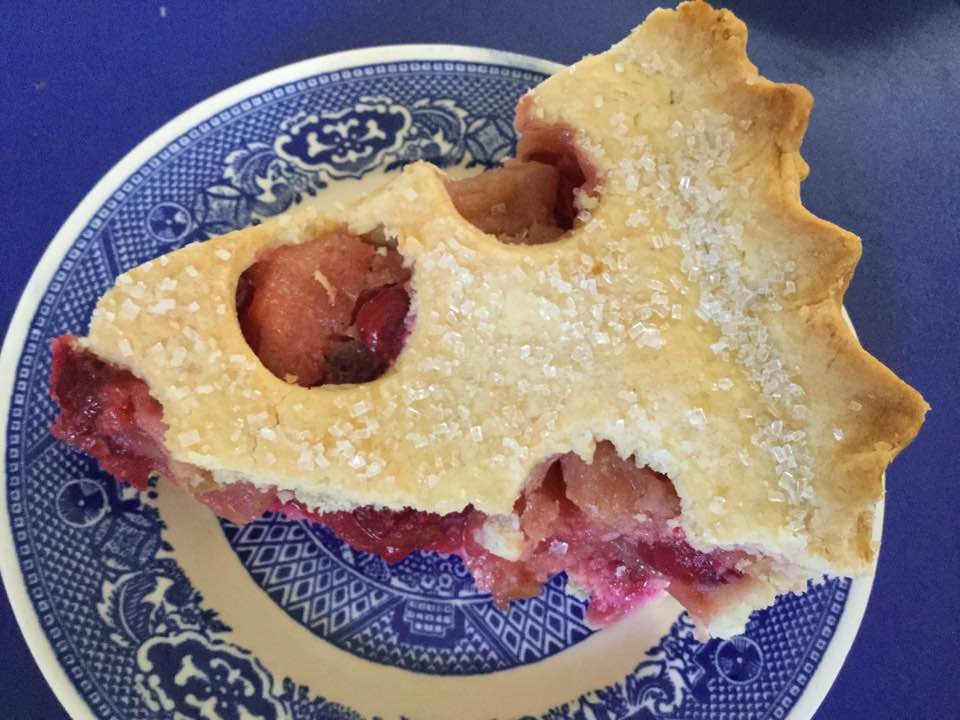
A pie made with King Arthur Basic GF flour blend for the crust.

My recipes generally tell you which flour blend I used. You cannot sub in measure for measure for a basic blend.  Nor can you use a baking mix for anything, but a recipe meant specifically for a baking mix. Get the right flour as specified and you will have a great start towards a delicious result. I hope I have educated you on this issue so you can be successful if you need to bake gf this holiday season. Have fun baking!

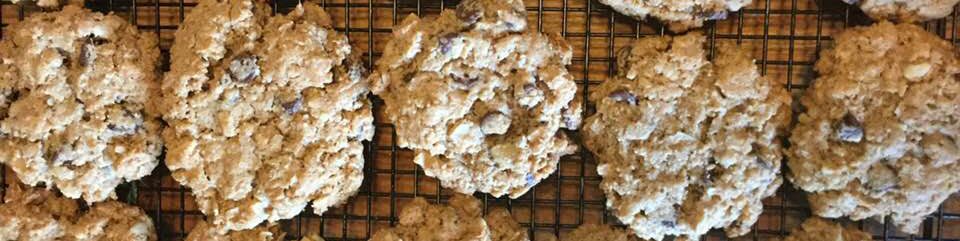
Sugar cookies made with a Measure for Measure flour blend in my old (pre-celiac) Betty Crocker cookie recipe.

Demystifying GF Flours for Holiday Baking Fun

Mid-December is upon us. Pies are being baked for desserts, fancy cake is on the menu and cookie season is pretty much here. I have already had emergency calls about gf flour choices and substitutions in creating something gf when the baker is not gf and is more than a little confused. So, I am reposting this flour treatise from last year, in the hopes that folks will read it and use this information to have the best possible results. GF baking is more technical than wheat flour-based recipes. Substituting is trickier especially flour subbing. So, before you make those gf cookies for a family member, read up on the differences, so you use the right flour. The wrong one will give you a poor result; so important to know what you are doing flour wise.

So, I am writing this post for a friend who wants to cook gf cookies for someone in her family for the holidays. I want to go over the flour issue particularly for someone new to cooking gf meals. It is slightly tricky, so I am going to try to make it clear for everyone: there are a lot of issues and different scenarios so be sure to read the whole article. So, here are my best thoughts and advice on using gf flours for gravy, and especially for baking.

You could use this rice flour for gravy making.

There are individual gf flours like rice flour, buckwheat flour, oat flour, tapioca flour, sweet rice flour, potato starch, cornstarch, sorghum flour, brown rice flour, etc.! A bewildering array of choices as almost any grain can be ground into a flour. Flour can then be processed to create a starch, which tends to be nearly flavorless but often has a big purpose in gf baking. I rarely use just one flour in a baking recipe. Why? Because a single flour is often missing an important characteristic of what we want in a baking result. A mixture has different kinds of flours to replicate all purpose flour (wheat based) or whole grain flour (also wheat based). Without the gluten there are a number of ways to make it a useful blend for cooking or baking. That said, I use just single flour blends in sauces. Just for sauces people!

I usually use blends for baking, 2-6 flours that work together to mimic wheat-based flour in different applications like bread, cake, cobbler, cookies, pastry or pasta dough. I have a number of them, but my favorite is one you can buy in most stores.  King Arthur’s Basic GF Blend; made of a proportional blend of brown rice flour, potato starch and tapioca starch.  I use it for over 90% of my baking and cooking needs. There are a number of blends available from companies like Bob’s Red Mill or Jeanes. One of my favorites is Better Batter; never see it in the store but it can be found online. There are many, many blends provided in gf cookbooks.  It can cause a traffic jam of jars/cans/zip lock bags of blends labeled and stored in your freezer or fridge.  Some of these blends have a gum like xanthan gum included. The gum helps your finished bread/cookie/cake hold together – in wheat based recipes it is the gluten that is the “glue” that holds things together. My blend doesn’t have it so I add it based upon my recipe. Xanthan or guar gum are commonly used. Doesn’t take much xanthan gum; ½-1 tsp is often enough in any recipe. You should always check on this gum issue; if none in the flour mix you will need to add some; often about 1/2 teaspoon per cup of flour. This amount of gum does vary due to what you are making. Look at a similar gf recipe and add as much gum as that recipe does. There also is psyllium gum but it is mainly used in breads and rolls. Not so much for cookies and cakes.

If your recipe is a recipe not formatted for gluten free baking, you must use a special blend meant for that circumstance. They are called measure for measure, or one-for-one blends. They were not around a decade ago; fairly new. They are carefully calibrated to sub in for all-purpose flour. They may not work as a substitute for whole wheat or rye flour, yeast baking is not where this flour is meant to be used, great for your old all purpose flour cookie or cake recipes.

I have used this measure for measure blend and had good results. It is calibrated to be substitutable in any gluten flour-based recipe except I would not recommend it for yeasted breads.
Amazon.com : Bob's Red Mill Gluten Free 1-to-1 Baking Flour, 44-ounce :  Grocery & Gourmet Food
Bob’s Red Mill calls it 1 to 1 Baking Flour; same idea as measure for measure. Again, use this in your regular recipe instead of the all-purpose flour in the recipe. This is an excellent flour blend but is Not suggested for yeast breads.

As I wrote above, measure for measure flour is fairly new and very useful. They are for when you want to make a normally gluten-based recipe but use a gf flour. FYI: most gf recipes have been altered from their original recipe or were created just for gf flour. If you want to make those cookies, you can’t enjoy anymore and sub in gf flour these new measure for measure blends is perfect to do that. You generally don’t need to alter your recipe or add gum. The flour blend is made to mimic regular all-purpose flour. It is not interchangeable with things like the Basic GF Blend from King Arthur that I mention above. Don’t use measure for measure in a gf calibrated recipe, use it to make stuff from your old wheat flour-based recipes. King Arthur or Bob’s Red Mill or a few other companies have a measure for measure blend so get that if you want to take your gluten-based recipe and change it to gf. I must caution you that these flours don’t work well if you are replacing flour in a yeast bread recipe. Works for quick breads, cookies, muffins, and many cakes but I wouldn’t make my old fav Italian bread recipe with these measure for measure as the result is unlikely to be similar to the recipe as made with wheat-based flour. Besides, I have an awesome gf Italian bread recipe my family clamors for!

One more thing, many companies now have gf baking mixes that can be used to make muffins, cookies, cakes, pancakes, etc. They are different from the blends described above. Do not substitute those blends for a basic blend like the one I use. These blends already have gum, baking powder, salt, etc. added to the flour. They are very convenient and there are lots of recipes formulated for using them. There are bread flour mixes that can be used to create shaped pastries; I just bought 1 boxes of Chebe All Purpose Bread Mix. Can’t wait to test it in a pastry recipe I found recently.

King Arthur Flour Baking Mix, All Purpose, Gluten Free | Flour & Meals |  Edwards Food Giant
I used an image for King Arthur baking mix as this is the only premade mix I have tried. It works great!

To repeat; there are single flours, there are blends with or without gum added, there are measure for measure blends for use in gluten-based recipes you want to recreate as a gf dish and there are baking mixes that can be used as a starting place for a quickly constructed baked good like a cake, cookie or muffin. I know, it seems complicated but read your recipe carefully, so you get the right kind of flour to make it successfully. The wrong flour will give you a poor result as gf baking is relatively unforgiving of big errors like that.

Oh, and there are read-made cake or brownie mixes just like you can buy with wheat-based flour; you add eggs, milk/water and oil to them to complete the mixture. The grocery store will likely have a number of choices for gf mixes to make brownies, cakes and other baked goods. Amazon has lots too! It’s where I got the Chebe flour mix.

Here is that Chebe Bread mix I mentioned above.

None of these blends/mixes are interchangeable between other types of blends. Use the blend the gluten free recipe asks for. If it is an old all-purpose flour-based recipe use the measure for measure. Except, do not use that measure for measure for a yeasted bread; quite unlikely to work especially when you use over 1 1/4 cups of it in a recipe; the more the recipe is depending on the flour the less likely it will be successful.

A pie made with King Arthur Basic GF flour blend for the crust.

My recipes generally tell you which flour blend I used. You cannot sub in measure for measure for a basic blend.  Nor can you use a baking mix for anything, but a recipe meant specifically for a baking mix. Get the right flour and you will have a great start towards a delicious result. I hope I have educated you on this issue so you can be successful if you need to bake gf this holiday season. Have fun baking!

PS: I was baking Christmas cookies last Sunday afternoon at a friend’s house; we used measure for measure mix for some recipes and King Arthur Basic GF Blend for some other recipes; it really depends on the recipe. We baked some delicious tender cookies that everyone will love whether they are eating gf always or just at this family’s gathering.

Sugar cookies made with a Measure for Measure flour blend in my old (pre-celiac) Betty Crocker cookie recipe.